Monday, 30 November 2009

Will Motty Borger’s Suicide Make Any Difference?


Motty & Mali Borger had been married for just two days when Motti “fell” from a seventh-floor balcony at the Avenue Plaza Hotel on 13th Avenue at 47th Street in Brooklyn, NY.

It is reported that Motty had disclosed to his new bride that he was a victim of sex abuse, and that when she was asleep, he went to the balcony and threw himself off.

I have no idea as to the veracity of the reports about the background to the Motty Borger case. We should clearly leave the investigation to the police and relevant authorities, while encouraging anyone with information related to the case to report it immediately to the police. 

What is certain, is that the effects of child-abuse often have long term impact upon the victims/survivors, resulting in severe psychological, psychiatric and physical illness even decades later; and there are many cases in which abuse victims have tragically resorted to suicide.

Indeed there is initial research which indicates that the abuse as a child even results in genetic changes which results in this increased propensity for suicide.

In addition to the ‘regular’ linkage between abuse and suicide, victims of abuse in the Jewish orthodox  community face additional pressures and trauma.

An important article was written since Motty’s tragedy, by Rabbi Yaakov Horowitz and Dr Benzion Twerski, which encourages abuse victims/survivors to seek therapeutic help and intervention. Effectively, a call for past victims to come out-of-the-closet and seek professional help. 

While absolutely true, this article is confined to advising past victims to seek out therapy; it does not touch on the related and still contentious issue of victims reporting child abuse cases to the state authorities. An especially severe problem in Jewish orthodox communities.

Orthodox children who have been sexually abused are more likely to lack the ‘vocabulary’ (not just literally the words, but also the concepts) to express to an adult what has happened to them - than the equivalent movie-watching, internet-viewing non-orthodox kids. In particular, pedophilia is a concept that is unlikely to have been explained to an orthodox child, nor the blamelessness of a pedophile’s victims. An overwhelming emotional and moral confusion can numb child sex abuse victims, literally, for decades – indeed the majority of victims never disclose.

And if the child does report to an adult, such as their parent or teacher, that orthodox adult is, unfortunately, less likely to take such a complaint from a child sufficiently seriously – as  awareness of the nature and consequences of child abuse is still relatively scarce. The adults are less likely to believe their child, or if they do, their concerns about the reputation of the child (shidduch) and of the child’s family (shainda), the presumed saintliness of the alleged perpetrator (who is usually a close acquaintance of the victim, and a member of the same orthodox community), and a reticence to disclose any ‘private’ or sexual matters, even at the best of times – will all be factors in not reporting the child’s claims further.

And even if the adult does understand and take the child’s claims seriously, and report the allegation onwards, orthodox adults will habitually report the matter to their rabbi, rather than directly to the police.

Perhaps the leading halachik authority for Chareidi ultra-orthodox Jews, Rav Shalom Yosef Elyashiv, issued a ground breaking psak (legal opinion) in 2003/5764. This psak required that rabbonim first ascertain the veracity of the claims of abuse. The psak says that if there is halachik proof that the claims are indeed true, and that the perpetrator is uncontrollable from assaulting others in future, then the matter should be referred to the police.

However, if there are not ‘reglaim ledavar’ (grounds for suspicion) and the allegations are a figment of the alleged victim’s imagination, then the case should not be passed over to the authorities/police; Rav Elyashiv cautions that reporting someone to the police can put the alleged perpetrator in a position of “chosing death over life”.

(A particularly ironic conclusion in light of Motty’s fate).

The Rav Elyashiv psak has been helpful in highlighting to rabbonim and communities, the need for proven cases of pedophilia to be referred on to the police/state authorities. Whereas, for generations, such a handing-over of Jews to gentiles/secular authorities was forbidden as “masira” (betrayal).

However, this psak clearly places the religious authorities in the driving seat to decide where on the scale between “no grounds for suspicion” (which should not be reported) to “halachik proof” that the perpetrator is known to be guilty and is not controllable in future (which does require reporting). There is a gapingly wide range of grey between these two cases – where most child abuse allegations are situated.

Rabbonim have therefore been given a highly inappropriate, illegal, task and responsibility of investigating allegations of pedophilia.

Rabbonim have been required to address allegations of child abuse, apparently as if it were an alleged civil offense (along with business law, marital and ritual matters – areas in which Batei Din/Rabbinical Courts, are fully qualified and entitled to rule), rather than as an allegation of criminal assault (such as murder or rape – which no responsible Bet Din would/should involve themselves in).

Rabbonim therefore claim competence, jurisdiction and control of a criminal investigation, including interviewing the parties, while applying halachik concepts of witnesses (for example, as a generality, neither children nor women are valid witnesses in a Bet Din/Rabbinical Court, and two valid witnesses are required as proof of an event) in order to determine the guilt/innocence of the alleged perpetrator.

Furthermore, Rabbonim balance a wider range of interests than solely the rooting out of the guilty and protection of their victims; they also have wider community interests to protect and their concerns about damage control can weigh heavily against the pure pursuit of justice.

In practice, Rav Elyashiv’s psak, while a break-through in requiring some Jewish pedophiles to be ‘handed over’ by rabbonim to the state authorities, is otherwise not practically helpful to those working with child abuse cases.

In order to bridge this gap between this halachik position , on the one hand, and the statutory reporting requirements (whereby a suspicion of child abuse is legally required to be reported to the police/authorities – and not to do so is a felony) together with the ethical standards of professional conduct (which prohibit involvement in a child abuse accusation prior to mandatory reporting), on the other, there have been various attempts to create bridging arrangements.

In the USA, some “Task Forces” have been established, or are in the process of being established, in some orthodox communities, whose job is to liaise between the community leadership and the state authorities in cases of alleged child abuse.

Here in Ramat Bet Shemesh, there has been a first-ever meeting between local rabbonim and the police and state child protection services, to attempt to establish cooperation on child abuse allegations.

Recently, there are an increasing number of rabbonim (such as Rav Hershel Schachter, Rav Yakov Blau and Rav Chaim Soloveichik), who have publicly stated that this offense needs to be re-categorised by rabbonim as criminal assault, and so the standard response to any allegations of child abuse must be to immediately refer to the state authorities - who are the sole legally authorized and qualified party to investigate such complaints; to judge, convict and sentence criminals; and to subsequently enforce tracking, therapy and supervision of post-incarcerated pedophiles.

“In instances of sexual abuse of children, students, campers etc., or spousal abuse… The Jewish community does not have the ability to investigate these types of cases. Wherever there are raglayim ladavar that there seems to be a problem, the proper government agencies should be contacted to investigate.” Rabbi Hershel Schachter, 2007.


Only the police can investigate crime suspects and take pedophiles off our streets.
   
In addition to the law-and-order role of the police, the process of reporting to police/authorities also enables professional therapists to legally and ethically administer the therapy which Rabbi Horowitz and Dr Twerski have called for. Furthermore, in most states, victims of child abuse are also entitled to state subsidized therapy, which can make the costs of this critical therapy affordable to all victims.

Furthermore, with the active encouragement, blessing and support of their rabbi and community, immediately reporting child abuse allegations to the appropriate authorities would give validation to the traumatized child – a critical part of the healing process.

Unfortunately it has sometimes been the opposite response, of rejection and even harassment of child abuse victims and those who aid them, by their own communities, which generates a second trauma for the victim, and which, tragically, increases the chances of future suicides.

Veyehi zichron baruch. May Motty’s memory be for a blessing.
 --------------------------
Motty's funeral: 

Sunday, 29 November 2009

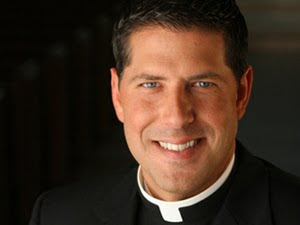
Pedophiles in Priestly Clothing


Illustrative Photo 


Case study: The Irish Catholic Church and Pedophile Clerics

There is a most amazing report now available on-line, which documents the performance of the Catholic Church in Dublin, Ireland in responding to complaints of clerical sex abuse of children.

The Dublin Archdiocese Commission of Investigation was established to report on the handling by Church and State authorities of a representative sample of allegations and suspicions of child sexual abuse against clerics operating under the aegis of the Archdiocese of Dublin over the period 1975 to 2004.

It follows parallel reports by the Attorney General for Massachusetts about sex abuse in the Catholic Church in Boston, and the Ryan Report about Children’s Homes in Ireland.

The investigative committee worked through over 100,000 pages of records and documentation, and was delayed by a senior priest suing the commission in order to impede their work. The investigation cost the tax payer over 3 million euros. It was completed in July 2009.

It’s a damning report of denial, cover-up and protecting the Church - at the expense of children.  

The Dublin Archdiocese’s pre-occupations in dealing with cases of child sexual abuse, at least until the mid 1990s, were the maintenance of secrecy, the avoidance of scandal, the protection of the reputation of the Church, and the preservation of its assets. All other considerations, including the welfare of children and justice for victims, were subordinated to these priorities. The Archdiocese did not implement its own canon law rules and did its best to avoid any application of the law of the State.

In 1994 the controversy and drama surrounding the exposure of the Fr Brendan Smyth case in 1994 brought clerical child sexual abuse to public attention. At that point, the response to the public outcry by officials from the Church was that they were on a ‘learning curve’ about the existence and nature of sex abuse in the Church. A claim the Commission found to be false and duplicitous.

The Commission lists numerous specific cases of alleged child abuse and details the formidable qualifications, in law and social work, held by leading members of the diocese who had been informed of the allegations. In addition:

The taking out of insurance [in 1987] was an act proving knowledge of child sexual abuse as a potential major cost to the Archdiocese and is inconsistent with the view that Archdiocesan officials were still „on a learning curve at a much later date, or were lacking in an appreciation of the phenomenon of clerical child sex abuse.
  
Consistent with other reports about the phenomenon of child abuse, the report confirms the relatively low number of children/adults lodging a complaint, for each act of child abuse found to have been perpetrated.
For example, one priest admitted to sexually abusing over 100 children, while another accepted that he had abused on a fortnightly basis during the currency of his ministry which lasted for over 25 years. [Yet] the total number of documented complaints recorded against those two priests is just over 70.

And the commission found one solitary case of a clearly fabricated complaint against a cleric.

It is noteworthy that, whereas the statistic of three cases of girls are sexually abused for every two abused boys, in the general population, this commission discovered: Substantially more of the complaints against clerics relate to boys – the ratio is 2.3 boys to 1 girl.

There are even substantiated concerns that pedophile clerics cooperated with each other for the purpose of  carrying out sexual acts with children. For example
When Fr Loannes was being investigated for the abuse of a young boy, Fr Boland, who was not a priest in the diocese at the time, turned up at the young boy’s home offering comfort and took the opportunity to abuse the young boy himself.


The Commission was also required to break through an ages-deep tradition and culture of secrecy in the Catholic Church.
Most officials in the Archdiocese were greatly exercised by the provisions of canon law which deal with secrecy. It was often spoken of as a reason for not informing the GardaĆ­ [Irish police] about known criminal offences.

……As can be seen clearly from the case histories, there is no doubt that the reaction of Church authorities to reports of clerical child sexual abuse … was to ensure that as few people as possible knew of the individual priest’s problem. There was little or no concern for the welfare of the abused child or for the welfare of other children who might come into contact with the priest. Complainants were often met with denial, arrogance and cover-up and with incompetence and incomprehension in some cases. Suspicions were rarely acted on. Typically complainants were not told that other instances of child sexual abuse by their abuser had been proved or admitted. The attitude to individual complainants was overbearing and in some cases underhand.

The acts of secrecy including reshuffling the cards, by posting alleged pedophiles to new diocese, without informing the authorities there of the background of the cleric.

Interestingly, the report also touches on the ‘inappropriate’ contacts between “devout” members of the Gardai/Police with members of the Church; which seems to have amounted to unofficial complicity by some police officers with protecting members and the institution of the Church.

The report does have some happier news, which is that since the recent exposure of clerical sex abuse of children by clerics, improvements have been made, including that all allegations of such abuse are now systematically referred by Catholic Church officials to the Police, who presumably have ceased to be complicit in Church policy of covering up crimes. .

Overall, the Commission’s Report makes remarkably gripping, and distressing, reading.
Its lessons should be read, learned and acted upon, even outside of the cloisters of the Dublin Archdiocese.

------------------------------------------------
Full report available:

Tuesday, 24 November 2009

Shalit Deal Catastrophic?

As the Israeli Government, on the one hand, and Hamas leaders on the other, edge towards a deal to return Gilad Shalit to Israel (apparently via Egypt), many question the price to be paid for his release.

Israel has historically been willing to release many hundreds of convicted, imprisoned terrorists in exchange for  each Israeli hostage/captive. The reports in the press present a similar deal is in the offing for Shalit.

There is an excellent (IMHO) article on the halachik views regarding such deals at: http://www.aish.com/sp/ph/48959406.html

From a strategic and military point of view, Rami Igra, who served as head of the Mossad's Prisoners and MIAs department, spoke to Israel National Radio:


Sunday, 22 November 2009

Right to Demonstrate?


For the second Shabbat running, a large crowd demonstrated against the desecration of Shabbat at Intel, which employs some two dozen Jewish workers in Jerusalem on the Sabbath.

There are mutual allegations of violence; the police have arrested demonstrators for damaging property; whereas the demonstration's organizers, the Eida Chareidit, have accused the police of wanton violence. The alleged use of illegal means by the demonstrators has evoked stinging criticism by the secular press, and embarrassment amongst some erstwhile chareidi supporters.

There is apparently nothing new about Intel's practice of employing Jews on Shabbat (Intel claim to have been doing this, with the relevant government approvals, for over ten years), so the timing of the row has attracted some criticism; there are those who accuse the demonstrators of seeking out artificial 'causes' to rally their forces for political motives (the chareidi candidate lost the last Jerusalem election for mayor), rather than because of any significant changes on the ground at Intel.

People have a democratic right to demonstrate (subject to police authorization etc); it is also accepted that many demonstrations (ever been to a demo?!) cross into illegal actions, and there are accepted consequences to this (legal process, bad PR, etc). And rallying the masses, even on an artificial pretext, is part of the democratic process in every free country.

And yes, demonstrations do generate strong emotions from supporters and opponents.
If there were no response, no-one would bother to demonstrate!

So, the demonstrators have every right to demonstrate against Intel for Shabbat desecration.

Whether this demonstration against Intel is smart, is the right thing to do, is good-for-the-Jews, however, is an entirely different matter.

Intel Israel, is the largest private employer in the country today - with 6,600 employees in its development and production facilities in Haifa, Jerusalem, Kiryat Gat, Petach Tikva, Yakum and Yokneam. Intel began operating in Israel in 1974 with five employees. Today export sales from Intel Israel are around $1.6 Billion. Intel therefore provides parnassah (livelihood) directly for 6600 families and for thousands of others who are suppliers/service providers to Intel.    

The Israel + Intel partnership is a flagship of the Israeli high-tec sector.

My main concern against these demonstrations is that they may frighten Intel and other big investors & job-providers away from Jerusalem, and even away from Israel. Govermnent, municipalities and the local business sector fought hard to bring Intel to Israel (there are many competitive locations around the world) and to successfully build up their presence here.

If there could be a way to eradicate Shabbat desecration (such as by using non-Jewish labour), while retaining good relations with "the hand that feeds us" then this would be far 'smarter' for klal yisrael than raucus high-profile public demonstrations- whatever their political agenda.

Thursday, 19 November 2009

Mazal Tov to the Children of Israel

Three year old Michal arrived at the hospital unconscious after having suffered extreme physical abuse at the hands of her uncle. During her three years she was severely beaten, burned and sexually abused. Michal died in the hospital after five months in a coma. During her three years of torture, nobody knew what was happening. Nobody heard anything. Nobody saw anything. Not family, not neighbors, not friends. Nobody said a word. As a result of this case, the Israel National Council for the Child initiated legislation – the Mandatory Reporting Law – requiring the reporting of any suspicion of abuse to the police or social services.

(From the Israel National Council for the Child).


Mazaltov Kids. The Mandatory Reporting Law for Child Abuse celebrates its 20th Anniversary.

The Mandatory Reporting Law (1989) in Israel is stricter than equivalent child-protection legislation in many other countries.

For example, in many States in the USA, only professionals are required to report suspicions of child abuse to the statutory authorities; whereas here in Israel, every citizen is legally required to report a suspicion of child abuse.

I understand that the penalty for non-compliance in Israel is 3 months imprisonment for a regular citizen, and six months imprisonment for a professional.

The definition of "suspicion" is rather ambiguous ("basis lechashash"), which can be a two-edged sword. On the one hand a non-compliant party could argue that without "sufficient" evidence, they were not obligated to comply. However, the authorities could argue that even a whiff of suspicion renders a citizen obligated to report – and punishable if he doesn't.

The only legally authorized parties to accept a report of child abuse in Israel are the Child Protection Officer of the Social Services and/or the Police. The difference between the two is that the mandate of the Child Protection Officer is to serve the best interests of the child, whereas the police are mandated to prevent crimes and arrest perpetrators. They are not necessarily the same function, for example the social services can elect that for them to report the complaint on to the police is not best for the child. However, that is THEIR decision, and not the citizen's!

In short, whether you are a kid, a neighbor or family, or a school principle, social worker, doctor or rabbi, who reckons something abusive might be going on  – you are obligated to report your concerns directly to either the Child Protection Officer of the City Social Services Dept (ask for "pkidat tzaad") or call your local police department. "Miyad"- immediately.    

So, Mazaltov to the Children of the State of Israel - on the 20th Anniversary of having your protection  instituted in the law.

Sunday, 15 November 2009

Jewish Press Carries Our Review of "Tempest in the Temple"


This week's Jewish Press, the largest independent Jewish newspaper in the USA, has published Tzedek-Tzedek's review of "Tempest in the Temple".

Hopefully this is another nail in the coffin of "Denial; Blame The Victim; Circle the Wagons" - which has been a characteristic response to child abuse in some Jewish communities.

http://www.jewishpress.com/pageroute.do/41425

Friday, 13 November 2009

Why You Didn't Know Maj.Hasan is a Palestinian Terrorist


If his name was Major Smith, you probably wouldn't know he was a Muslim.

But he was called Major Nidal Malik Hasan, so everyone knew within minutes that the murderer of 13 US soldiers in Fort Hood Army Base, is a Muslim. That he was shouting the terrorist/jihad war-cry "Allah Akbar" while murdering his victims, was also something of a give-away.

However, senior US Army officers are downplaying the significance of Hasan's Muslim faith, including Chief of Staff Gen. George Casey who cautioned against linking the murders to the perpetrator's faith "We need to be very careful about that...the speculation could lead to backlash against some of our Muslim soldiers" adding "our diversity gives us strength".

Americans I spoke with this week were unaware that Maj. Hasan is not simply a Muslim, or even "a Jordanian" (as has occasionally been reported) ... but that he is a Palestinian.

This is because neither the Army, nor the Government, nor the US Press have described Hasan as a "Palestinian". Much less "A Palestinian Terrorist".

Hasan's parents emigrated from a Palestinian village in the West Bank to Virginia, and to this day Hasan (although he was born in Virginia) described himself on the Mosque register where he attended as being "Palestinian". Hasan's brother Anas Hasan returned from the USA to Ramallah in the West Bank, where he now lives with various cousins.

The US Army are bending-over-backwards to avoid acknowledging that Hasan is a Palestinian terrorist, pointing instead to the work-related stress Hasan was under giving therapy to traumatized soldiers, and Hasan's personal concerns about being posted to Iraq or Afghanistan.

The US Forces and Government have a lot to lose by calling a spade a spade in this case.

It is a major blow to US Army prestige that a Palestinian terrorist has successfully infiltrated the US Forces, and then carried out an effective terror attack upon US troops, in a US Military Base, on US soil. We are not talking putting a bomb on a bus, a train or in a restaurant. Fort Hood Army Base is no "soft target" by any definition. And the resultant kudos to the terrorists is (regretfully) enormous.

Hasan's attack on Fort Hood is sort-of the US Army's 9/11.

Furthermore, behind Gen. Casey's absurd plea not to draw a link between this attack, to the Muslim origins of the perpetrator, is also a concern about the consequences of setting new criteria for re-screening every Ahmed, Mohammed and Hasan as a potential security risk. As a 5th column. As a potential traitor...will cause ripples throughout the armed forces.

Indeed, right to the very top.

Even the US Commander-in-Chief.

President Barack Hussain Obama.

No-one would suggest that Obama is a 5th Column. Or has dual loyalties. Or that Barack Hussain Obama's policies of 'engagement' with Iran, Syria and their ilk, the worlds most extreme Islamisists, may compromise US security.

But the process of re-screening the President of the USA, according to a new security risk profile arising from the Hasan attack, could be, urrr…awkward.

It would be so much more convenient if Major Hasan had been called Smith.

Sunday, 8 November 2009

When Does Reporting Become Ratting?


From Goldstone to Child Abuse

Every child knows that his decision to report alleged misdemeanors by his fellows in the school-ground to an adult, carries with it a risk of being labeled, and often treated, as a ratter or sneak.

Retired South African judge Richard Goldstone, who has put his name behind the deeply critical Goldstone Report about the Gaza “Cast Lead” campaign, is Jewish and even has “deep ties” to Israel. Goldstone has served as a trustee of the Hebrew University and a president emeritus of World ORT, the Jewish organization that is a leader in vocational training and education.

Goldstone describes himself as a Zionist, and says that he was motivated to head the UN Human Rights investigative committee on Gaza as means of helping Israel: “I was driven particularly because I thought the outcome might, in a small way, assist the peace process,” he told the Forward.

In the Jerusalem Post. Goldstone says: "My first wish and hope is that there would be open inquiry in Israel," and his daughter Nicole Goldstone to Israel’s Army Radiothat: he was doing the best thing for everyone, including Israel," she said. "He is honest, tells things how he sees them and wants to uncover the truth."

Meantime, on the street in Israel, Richard Goldstone is arguably the second most unpopular man on the planet, closely following Mahmoud Ahmadinejad, the President of Iran.

Other examples of where this moral confusion exists include corporations who dissuade staff from reporting corruption or abuse allegations to outside bodies, which have themselves initiated “whistle blowers” protection programs – where the Government can protect the reporting party against being harassed by his employer.

Universities in the US under-reported sex crimes on their campuses for decades, in order to retain better-than-deserved reputations and continue the flow of fee-paying students.

The Catholic Church systematically covered up sex-abuse by clergymen for generations, until 2003 when the tip-of-the-iceberg was revealed in Boston, setting of a domino effect of scandals throughout the Catholic world.

In the Jewish community, there is a halacha forbidding the reporting or handing-over of a Jew (“moiser”) to the non-Jewish authorities. Like many rules, this one has its exceptions.

Indeed I myself have been accused of this, in my work advocating for victims of child abuse.

In almost all circumstances where people report allegations further up the food-chain there is a moral conflict between protecting innocent parties from alleged abuse, and the requirements of loyalty to a ‘club’ – such as a community or even country (in the case of Goldstone).

In my opinion, the litmus test is to answer “What are you reporting to Who?”

When a kid reports that a fellow in the schoolyard miscalled a ball, to the leader of the in-school mafia – then the kid should expect to be unpopular.

The Jew who reported an alleged misdemeanor in the community to the Czar’s representatives, would likely be guilty of “Moiser” and the community could exact consequences.

When Goldstone accepted the position to head the UN Human Rights Council’s investigative committee into the Gaza Cast Lead operation, he was aware of the rabidly anti-Israel history of the misnamed Human Rights Council and of the biased mandate he was required to report under. Goldstone knew that any criticism he reported - particularly coming from a Jew - would be cynically used by Israel’s enemies to weaken Israel and attack it.

Goldstone is correctly despised on the streets of Israel.

However, when a kid reports that a fellow is selling drugs to other kids on the school grounds, to the school authorities, then this is an appropriate, even courageous step to take.

When an employee reports corporate corruption to external supervising bodies, this is also highly appropriate, and the employee deserves the support and protection of the authorities to enable him to do this.

And when allegations of child abuse are made within a Jewish community in Israel, the USA or any other democratic liberal society (where the system of justice is reasonable and fair), in order to protect the victims and potential victims, and to assure justice is done with the alleged perpetrator – it is appropriate and praiseworthy to report these to the social services and/or to the police.

But I leave the question open about the role of blogs – when does reporting on a blog become ratting?

Thursday, 5 November 2009

Shaking Your Baby to Death


Anyone who has been a parent, or who has cared for other people’s babies, knows how frustrating it can be when the baby cries…and cries…and cries…oh, my goodness, and CRIES...

An average baby cries for 2-3 HOURS each day. And 20-30% of babies cry considerably more than that.

“Stop crying! Stop it will you! Oh STOP IT!”

Add to the situation the carer's physical and emotional exhaustion, and also the exhaustion of regular baby-care techniques (feeding, changing, cuddling…you name it) - and many carers have, in desperation, shaken their baby.

Sometimes, this shaking actually seems to work – as the baby might indeed stop crying and become passive, sleepy, subdued after being shaken. So the initial shaking in anger/frustration can even become a “technique” for stopping the baby from crying.

Whether from just one shaking episode (typically even less than 20 seconds) or from several shakings, the damage to the baby’s brain can be devastating. People are literally shaking their babies to death – or to irreversible brain damage.

Shaken Baby Syndrome (which is a subcategory of Abusive Head Trauma) is estimated to be responsible for 300 deaths and 1200 cases of severe brain damage a year in the USA. According to the Israeli National Council for the Child, they estimate 15 babies die each year in Israel; the NCC is therefore currently launching a nationwide awareness campaign to reduce this human catastrophe here in Israel.

According to the The National Center on Shaken Baby Syndrome, the medical effects of shaking babies are: "Approximately 25 percent of all SBS/AHT victims die as a result of their injuries. Of those who survive 80% suffer permanent disability such as severe brain damage, cerebral palsy, mental retardation, behavioral disorders and impaired motor and cognitive skills."

Their practical advice is: “It is important to note that SBS is preventable. Shaking occurs frequently when a frustrated care giver loses control with an inconsolable crying baby. It is important to realize just saying "don't shake a baby" is not enough. A plan of action or suggestions to deal with the situation need to be offered. Parents and other care providers need assurance that allowing a baby to cry is okay if all their needs have been met. The care provider should address their stress level and try stress management.

"Parents should share the message of the dangers of shaking with all who care for their infant or child, including spouses, their own parents, siblings, day care providers and others. Parents need to let those caring for the infant know that it is okay to call for help when needed.”

If you have a baby, or are a carer for someone else’s baby, please review: www.dontshake.org

You can also call the Israeli National Council for the Child helpline (call during regular office hours, it's not 24/7): 02-6780605.

If you are concerned about any changes in your baby’s health, including symptoms which may be Shaken Baby Syndrome – call your Pediatrician or Emergency Response service immediately.

DON’T SHAKE – GET HELP!!!